JPaul
Well-Known Member
- Messages
- 2,436
- Location
- Way up north, UT
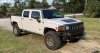
I like the feedback and your questions have some merit; given your experiences. I have decided to retain the factory functionally of the dashboard transfer case selector switch- It's what Hummer would have done. 2WD operation is like any other Chevrolet/GMC pickup truck equipped with a factory 2hi/4hi/4lo transfer case. Some pros of this are (1) power distribution 100% to rear wheels, (2) elimination of torque steer, and (3) acceleration!!! for everyday driving. The cons are (1) loss of full time AWD, (2) increased rear tire wear from the skinny peddle, and (3) manual input/selection of 4x4. It's true, I live in Florida and it does rain almost daily. Before owning the H3T, I drove my 2WD Silverado everywhere, including the rain, dirt roads, etc. The handling and readability of my Silverado was never an issue even on wet roads because the stability control system is designed to compensate for tire slip. But, I do agree with you on wet road handling- AWD is superior.
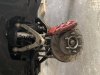
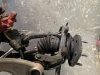
Based on your above description, your experience with driving in "2WD" on your H3 was different in a few ways. First, you removed the front drive train components completely, resulting in a large weight loss from the front suspension. This "sprung" weight loss over your front IFS more then likely caused under steer, poor handling, and alignment issues. Second, if you removed your front CV axles from the hubs, your hub bearings were doomed to fail- Fast. The hub bearings on a 4WD vehicle are designed to support the vehicles "Sprung" weight in the following order: Upper control arm- Steering knuckle- Hub/Bearing- CV Axle- Bearing/Hub- Lower control arm. The CV axle carries/distributes the majority of the vehicles weight while inside the bearing assembly. Additionally, an unsupported (Rear- Outer Axle Housing) bearing could drift in/out of the hub; everything I have read/researched about this topic is constant. Second, you mentioned no improvement in your fuel economy/performance. I would agree with you, given your approach. I also debated on physically disconnecting my front drive-line (front drive shaft removal), when I was completing some repairs/improvements. How would this affect the vehicle? Very simple- You now have only 60% of your engine HP/torque going to your rear wheels. The remaining 40% is wasted on the disconnected transfer-case front input shaft. I realized, no matter what, the factory 4494 was designed with a planetary gear set with a fixed power distribution 40/60. Given this information, its possible your MPG got worse even with the weight savings.
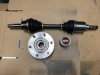
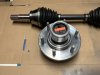
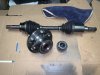
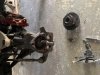
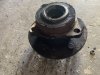
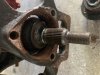
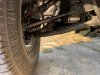
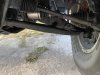
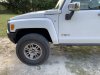
Lastly, your absolutely right about the need for additional CV axles in the future. I've considered this issue and I realized some added benefits of the Manual locking hubs may address this concern. First, IF I break a CV axle/shaft, I can unlock them and drive away. Never again will I be forced to perform repairs on the trail/road, in-order to get home. I would rather continue to use the H3T in 2WD until its fixed then be stuck. I don't do any rock crawling- that brings a whole other discussion on the topic. Second, the only custom part on the CV is the outer axle housing which I plan on having made for a rainy day; future discussion after I post some pictures. I hope I answered some if the common questions/concerns that I've read repeatedly on many H3 forum discussions on 2WD upgrades. Simply think about a factory Z71 4x4 and imagine that drive-line in a H3T!:thumbs:
Ok, first, please don't go back and edit a one sentence reply into a multi-paragraph response after there have already been enough replies to create another page on the thread. I had no idea you wrote any of this until I went back to re-read what I had originally written. If I hadn't done that I would never have known you wrote a short essay in replacement of your original one or two sentence response. Just do a new reply with a quote so that everything is in the original order and can be seen.
Second, you pros/cons seem to spell out to me exactly why not to bother with this modification.
2WD operation is like any other Chevrolet/GMC pickup truck equipped with a factory 2hi/4hi/4lo transfer case. Some pros of this are (1) power distribution 100% to rear wheels, (2) elimination of torque steer, and (3) acceleration!!! for everyday driving.
Just like every other 4wd pickup. Buy a Hummer, like nothing else, then turn it into the same thing as everything else. Doesn't seem like a win but OK.
Not sure why 100% to the rear wheels is a pro, unless you want to do doughnuts in the mall parking lot.
Regarding torque steer, this isn't a FWD car with a transverse mounted engine/transmission and unequal axle lengths. Nor is it anything that you should be worrying about torque steer with. It's a Hummer, not a turbo'd Civic. You're not winning any races with this thing. Plus torque steer is generally due to in-equal shaft lengths in addition to a transverse mounted engine/transmission. The CV axles are the same length as each other. And this is a longitudinal engine/transmission. Plus you're not just driving the front wheels, you're also driving the rear wheels. Another benefit of full time 4wd. Gosh I haven't had to think about torque steer in years, thank goodness.
Acceleration will see little to no difference. If anything it can be worse because now you're relying on only 2 tires with less weight on them to transfer power to the ground without breaking loose rather than 4 tires. You're going to break loose and lose traction far more easily in 2wd than 4wd. Power means nothing if you can't get it to the ground efficiently. Granted though it is cheaper to only have to beef up one end of the drivetrain to handle big power. But it is not the most effective way of putting it down.
The cons are (1) loss of full time AWD, (2) increased rear tire wear from the skinny peddle, and (3) manual input/selection of 4x4.
It's 4wd, not AWD. I guess it's OK to lose full time 4wd if you are OK with poor traction/handling in both dry and wet conditions.
Yeah, you'll wear out the rears more. Just have to do more frequent rotations.
So, taking some steps backwards with having to get out and manually locking the hubs rather than sitting inside your climate controlled, dry cabin and simply continuing on until you need to get into 4hi locked or 4lo locked and just push a button? That is definitely a con for me.
Before owning the H3T, I drove my 2WD Silverado everywhere, including the rain, dirt roads, etc. The handling and readability of my Silverado was never an issue even on wet roads because the stability control system is designed to compensate for tire slip. But, I do agree with you on wet road handling- AWD is superior.
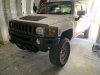
I wonder how the H3 stability system does when it's only in 2wd. Hopefully it works OK, but again, the design for it was around it being 4wd, not 2wd. Might see some weirdness with it due to that. Stab systems are great and all, but they can't take a 2wd vehicle and give it the same handling and stability as a full time 4wd vehicle. Which this is full time 4wd, not AWD. Similar concept, but different execution. How long did you drive the H3T before deciding you needed to convert it to 2wd? I'm wondering if it wasn't for very long, so you haven't had the opportunity to experience the all around superiority of full time 4wd vs part time 4wd (2wd).