Chastan
Well-Known Member
- Messages
- 149
- Location
- Reedsburg, WI
POST #1 CHAPTER ONE
History and Project Goals
(posts have been updated with some new photos 10/27/11)
This is going to be a large set of posts (8) so start reading but be prepared for a long one. Due to the length and the number of pictures I am going to break this up into sections. Bear with me as I try to present it in a clear and manageable way.
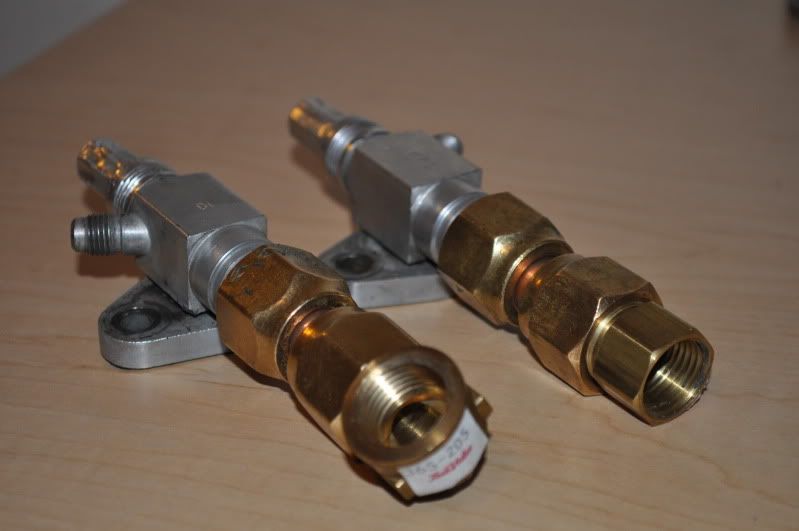
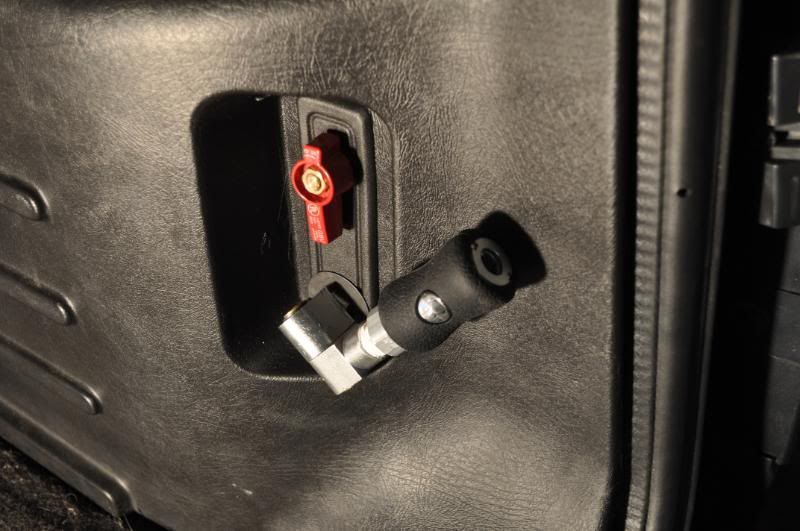
Some teaser photos…



A little history
As many of you know, in the Jeep world they have been converting York Air Conditioner compressors in to onboard air compressors for years. The unique aspect of the York design is that unlike most air conditioner compressors that use the refrigerant (Freon in the old days) as the lubricant the York design uses a separate oil reservoir to keep the moving parts oiled. So if you remove the refrigerant from the system you have an instant air compressor. Add to this that the York model was used on dozens of car and truck models for decades so they are readily available.
You can find several great write ups on installs into Jeeps and even a couple other vehicles. In all my searching I have not found anyone that has done an install into a HUMMER.
The main reasons I drifted to this type of set up for an onboard air system include:
The volume.
Much more air through this system then any electric set ups out there. I will not only be able to air back up all four tires in record time, I also can run air tools like I was in my garage at unlimited duty cycle and instant high PSI.
Tied to the engine not to the electrical system load.
For me I would rather rely on a V-belt that I can change out then another high amp load on the electrical system. Of course if my engine is dead I will only have what air is in my tank but if your engine is dead how long can you run and electric compressor before the battery goes dead.
Established track record.
I may be the first (as far as I can tell) to put one on a hummer but there are hundreds maybe thousands out there in jeeps and other vehicles and the documentation of installs and nuances to go with that history.
Goals
So I had some goals before I started. Me, being the cheap bastard I am, wanted to spend a fraction of what a “kit” costs. You can buy everything you need (except hummer bracket as it does not exist) for $1,200 - $1,400 as a package. As you will see at the end I did this on the cheap by finding deals on the expensive elements and building what I needed myself.
I also knew this was going to be a fun one to put together. This project involved lots of designing, welding, plasma cutting, milling machine, electrical wiring, air system plumbing, vehicle parts, painting, fabricating, etc.
Finally, I wanted something that had a real pragmatic application not just looked pretty. Airing up after trail rides has always been a thorn in my side both in finding a location and the time it takes to get those 37’s back up to 50 psi. What do they say…. “The right tool for the job” well I wanted the right tool so here is what I did…
History and Project Goals
(posts have been updated with some new photos 10/27/11)
This is going to be a large set of posts (8) so start reading but be prepared for a long one. Due to the length and the number of pictures I am going to break this up into sections. Bear with me as I try to present it in a clear and manageable way.
Some teaser photos…
A little history
As many of you know, in the Jeep world they have been converting York Air Conditioner compressors in to onboard air compressors for years. The unique aspect of the York design is that unlike most air conditioner compressors that use the refrigerant (Freon in the old days) as the lubricant the York design uses a separate oil reservoir to keep the moving parts oiled. So if you remove the refrigerant from the system you have an instant air compressor. Add to this that the York model was used on dozens of car and truck models for decades so they are readily available.
You can find several great write ups on installs into Jeeps and even a couple other vehicles. In all my searching I have not found anyone that has done an install into a HUMMER.
The main reasons I drifted to this type of set up for an onboard air system include:
The volume.
Much more air through this system then any electric set ups out there. I will not only be able to air back up all four tires in record time, I also can run air tools like I was in my garage at unlimited duty cycle and instant high PSI.
Tied to the engine not to the electrical system load.
For me I would rather rely on a V-belt that I can change out then another high amp load on the electrical system. Of course if my engine is dead I will only have what air is in my tank but if your engine is dead how long can you run and electric compressor before the battery goes dead.
Established track record.
I may be the first (as far as I can tell) to put one on a hummer but there are hundreds maybe thousands out there in jeeps and other vehicles and the documentation of installs and nuances to go with that history.
Goals
So I had some goals before I started. Me, being the cheap bastard I am, wanted to spend a fraction of what a “kit” costs. You can buy everything you need (except hummer bracket as it does not exist) for $1,200 - $1,400 as a package. As you will see at the end I did this on the cheap by finding deals on the expensive elements and building what I needed myself.
I also knew this was going to be a fun one to put together. This project involved lots of designing, welding, plasma cutting, milling machine, electrical wiring, air system plumbing, vehicle parts, painting, fabricating, etc.
Finally, I wanted something that had a real pragmatic application not just looked pretty. Airing up after trail rides has always been a thorn in my side both in finding a location and the time it takes to get those 37’s back up to 50 psi. What do they say…. “The right tool for the job” well I wanted the right tool so here is what I did…
Last edited: