

Several years ago I made and installed a dual battery and air compressor platform on the H2. The reason for this post is the recent addition of a recessed air compressor connector on the rear bumper. Before I settled on my set-up, I looked at the Wrangler NW dual battery system and, although it’s good, it seemed to have some shortcomings. It uses two small batteries. It adds about 30 lbs. to the stock battery tray, which is just mounted to sheet metal. And, the hardware looked a little skimpy (for mounting about 80 lbs. of batteries.) No offense to them, but I've had too many things wiggle lose or break and I wanted to avoid another problem, if possible.
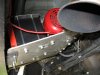
Finding a mounting location for the second battery turned out to be easy. Its just not in the engine compartment. While some H2's have the air suspension option, every H2 has the brackets (or a portion of the brackets) and the holes in the frame to mount the air compressor for the air suspension. If you have the air suspension, this location may not work - you’ll have to check. Using the stock air suspension compressor location, (located just behind the rear axle pumpkin), I fabricated a platform and the necessary forward bracket. There was enough room on the surface of the platform to mount an ExtremeAire air compressor, and an Odyssey 1200 battery.
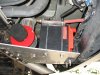
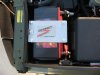
Back in the engine compartment, the stock battery location was large enough to allow the use of an Odyssey 1700 as a main battery. I dumped the stock battery tray and fabricated a much stronger stainless steel one and a hold down, to house the 1700. With this system, the 1700 had more juice and was a much better battery than stock and the 1200, when used as an emergency back up, was more than enough to crank the 6.0 if the main battery went dead. The system also allows both batteries to be used for high amp needs.
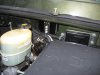
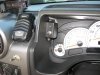
The isolator/combiner, by Hellroaring, easily mounted in the engine compartment and the remote control tucked away nicely on the inside of the instrument cluster sun shade (note: the old Nextel cell in the picture). From the drivers seat, a flick of the switch can change from the main battery to the backup battery to start the motor. In the remote’s center position, both batteries charge while driving. With the ignition off, the batteries are isolated and all accessories will be powered by the main battery.
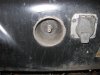
Initially I had the air compressor mounted so that the connector stuck out from the bumper by about 2-3 inches. I was never completely satisfied with this, in fear that something on the trail would rip it off. Solution - I recessed the connector and now its safe from almost any trail hazard. Altogether, this set-up has been working now for over 6 years and not a single breakdown or failure.
Finding a mounting location for the second battery turned out to be easy. Its just not in the engine compartment. While some H2's have the air suspension option, every H2 has the brackets (or a portion of the brackets) and the holes in the frame to mount the air compressor for the air suspension. If you have the air suspension, this location may not work - you’ll have to check. Using the stock air suspension compressor location, (located just behind the rear axle pumpkin), I fabricated a platform and the necessary forward bracket. There was enough room on the surface of the platform to mount an ExtremeAire air compressor, and an Odyssey 1200 battery.
Back in the engine compartment, the stock battery location was large enough to allow the use of an Odyssey 1700 as a main battery. I dumped the stock battery tray and fabricated a much stronger stainless steel one and a hold down, to house the 1700. With this system, the 1700 had more juice and was a much better battery than stock and the 1200, when used as an emergency back up, was more than enough to crank the 6.0 if the main battery went dead. The system also allows both batteries to be used for high amp needs.
The isolator/combiner, by Hellroaring, easily mounted in the engine compartment and the remote control tucked away nicely on the inside of the instrument cluster sun shade (note: the old Nextel cell in the picture). From the drivers seat, a flick of the switch can change from the main battery to the backup battery to start the motor. In the remote’s center position, both batteries charge while driving. With the ignition off, the batteries are isolated and all accessories will be powered by the main battery.
Initially I had the air compressor mounted so that the connector stuck out from the bumper by about 2-3 inches. I was never completely satisfied with this, in fear that something on the trail would rip it off. Solution - I recessed the connector and now its safe from almost any trail hazard. Altogether, this set-up has been working now for over 6 years and not a single breakdown or failure.
Last edited:


